Property type
Off-plan property in Dubai
Buying before a building is finished gives you newer homes, staged payments and often a better price. Here is how the system protects you, what to check and which launches we currently recommend.
By the DHS advisory teamChecked against official sources
Quick answer
Off-plan property in Dubai is a home bought before the building is finished, paid for in stages. Developers must register projects with the Dubai Land Department and take buyers' payments into a project escrow account under Law No. 8 of 2007, and each sale is recorded in the Oqood register. Rental income starts only after handover.
What off-plan means
An off-plan property is bought from the developer before the building is complete, often before construction has started. You choose your unit from floor plans, renders and a sales model, sign a Sales and Purchase Agreement (SPA) and pay in instalments while the building rises. At handover you receive the keys and the title deed.
Off-plan sales make up a large share of all property transactions in Dubai. For international buyers they have three clear attractions: the newest buildings and layouts, payment schedules spread over two to four years, and launch prices that are often set below what comparable finished homes sell for.
How you pay: off-plan payment plans
Every project has its own schedule, but most fall into one of three shapes.
| Plan | How it works | Suits |
|---|---|---|
| Construction-linked | Instalments are due at construction milestones (20%, 30%, 40% complete) | Buyers who want payments tied to visible progress |
| Time-based | Instalments fall on fixed dates after booking (60, 120, 180 days) | Buyers who prefer a predictable calendar |
| Post-handover | Part of the price is paid after you receive the keys, often over 1 to 3 years | Buyers who want to rent the unit out while paying |
Many plans combine the first two. Meriva Sunset by Ellington Properties is a good example: 20% on booking, 50% in nine instalments during construction (five on dates, four on construction milestones) and 30% on completion. That is usually written as a 70/30 plan. Our guide to off-plan payment plans compares the structures in detail and explains what happens if you cannot pay an instalment.
Budget tip: the booking instalment is not the only upfront cost. The Dubai Land Department registration fee of 4% of the price is normally due when the sale is registered, which is at the start for off-plan purchases.
How Dubai protects off-plan buyers
Dubai’s off-plan rules were rebuilt after 2008, and today they are among the most structured in the region.
- Project registration. A developer can only sell units in a project registered with the Dubai Land Department (DLD) and its regulator, RERA.
- Escrow accounts. Under Law No. 8 of 2007, buyers’ payments go into an escrow account opened for that specific project at an approved bank. Money is released to the developer against certified construction progress, not when it suits the developer.
- Oqood registration. Each off-plan sale is recorded in the DLD’s interim real estate register (Oqood). It proves your purchase before a title deed exists, and it is what lets you resell or, with some banks, finance the unit before completion. Our guide to Oqood and the title deed explains what each document proves.
- Title deed at handover. When the building is complete, the interim registration is converted into a full title deed in your name.
These safeguards do not remove every risk. Construction can run late, specifications can change within limits set in the SPA, and the resale market for a unit under construction can be slower than for a finished home. Read is buying off-plan in Dubai safe? for a full checklist before you sign, and our handover and snagging checklist for the end of the journey.
What to check before you reserve
- The developer’s delivery record. Look at what they handed over in the last five years, how late it was and how the buildings have aged. We share this with you for every project we present.
- The escrow account. The SPA and the DLD listing should name the project escrow account. Payments go there, never to a personal account.
- The payment plan in cash-flow terms. Write down every instalment with its date or milestone and check that you can fund the completion payment, either in cash or with a mortgage approval in principle.
- Service charges. Ask for the estimate per square foot per year. At Meriva Sunset it is AED 18 per sq ft, so a 1,280 sq ft two-bedroom would pay about AED 23,000 a year.
- Resale rules. Find out when you may resell before handover and what the developer charges for the no-objection certificate.
- The unit itself. Floor, view, orientation and layout drive both your enjoyment and the resale price. On our project pages you can see every residence in 3D, in its true position in the building.
Off-plan versus ready property
| Off-plan | Ready (resale) | |
|---|---|---|
| Price | Launch pricing, often below finished equivalents | Market price |
| Payment | Staged over the build, sometimes after handover | Full price at transfer (cash or mortgage) |
| Rental income | Only after handover | From day one |
| Choice | Pick floor, view and layout from the full stock | Limited to what is listed |
| Risk | Delays, design changes | What you see is what you get |
| Agency fee | Usually paid by the developer | Usually 2% plus VAT, paid by the buyer |
Off-plan suits buyers who can wait for income and want a newer home on easier terms. Ready property suits buyers who need rent or a home immediately. Our off-plan or ready comparison works through the cash, mortgage limits and rental timing with an example.
Is off-plan right for a Golden Visa?
The Dubai Land Department’s Golden Visa service for property investors asks for property worth at least AED 2 million. Off-plan buyers hold an Oqood registration until handover, and according to Gulf News a February 2026 federal circular confirmed that off-plan property qualifies on the total value in the Oqood contract. The DLD’s service page still lists a title deed among the documents, so confirm the position for your project when you apply. Our Golden Visa guide explains the details.
Off-plan projects we currently sell
We work with a small number of launches that we have checked ourselves. Each project page shows real floor plans and, where the developer has published floor plates, a 3D model where you can open every floor.
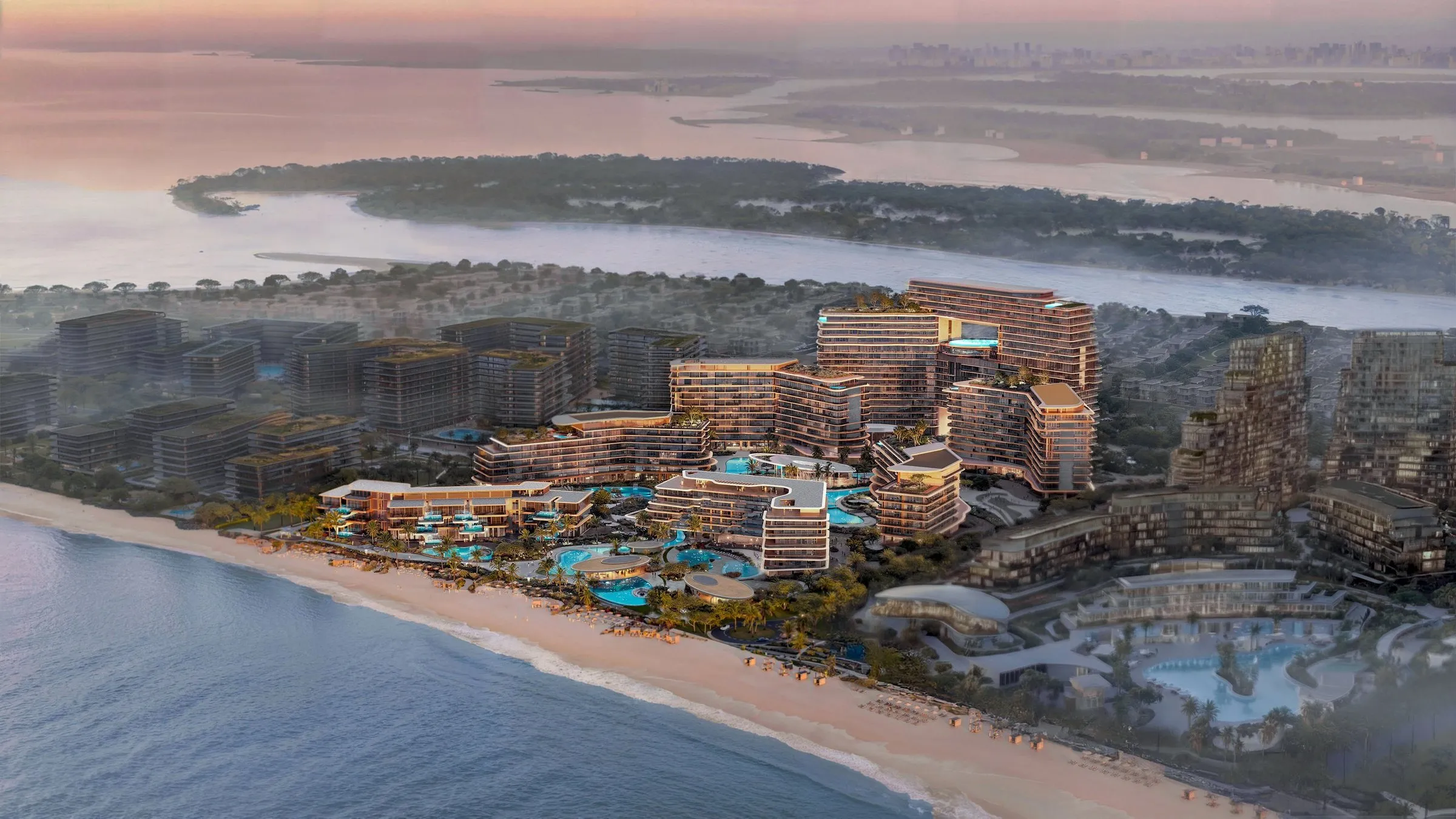
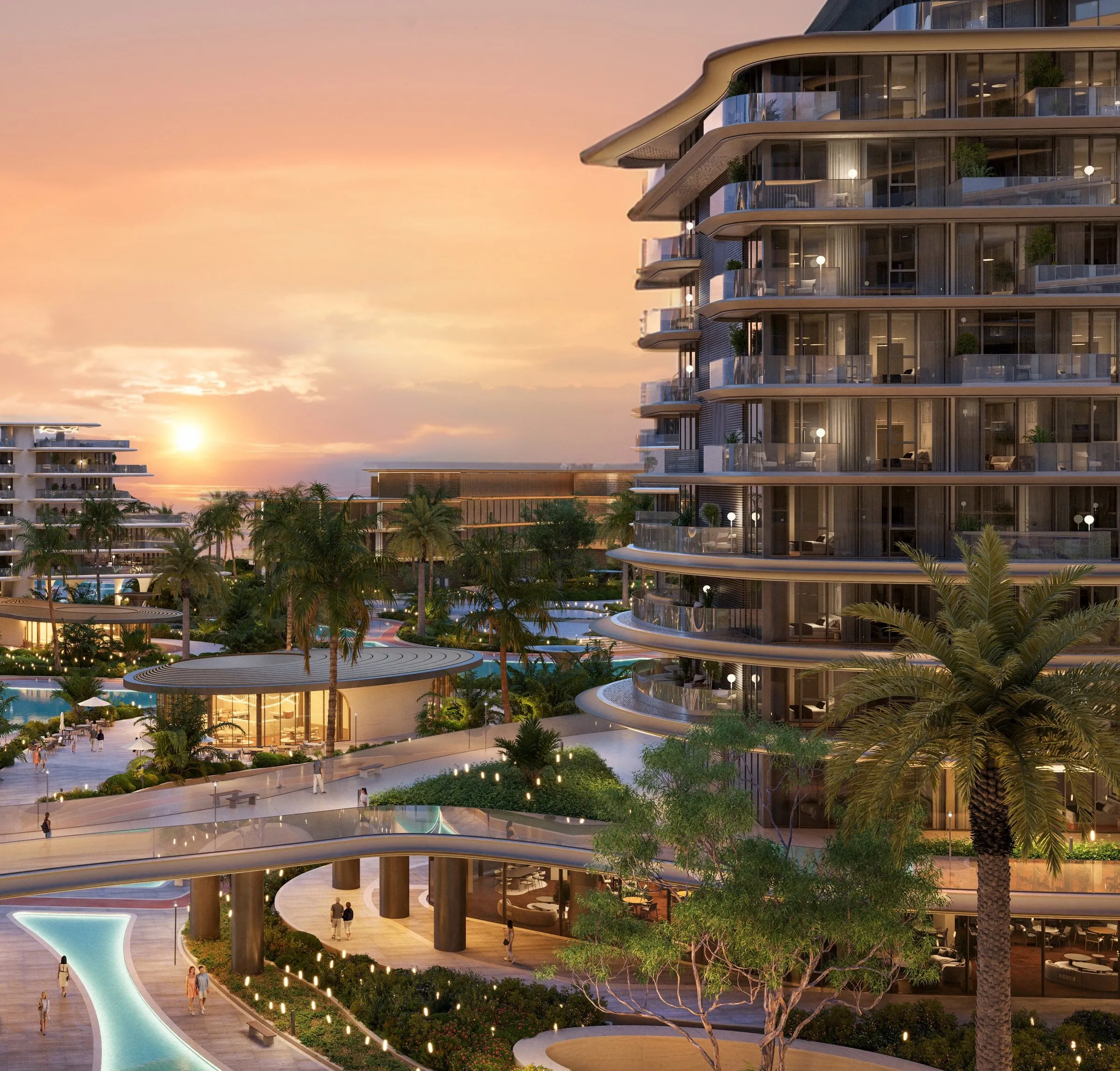
- Meriva Sunset, Dubai Islands: 377 residences on a private beach, handover Q2 2030, 70/30 plan.
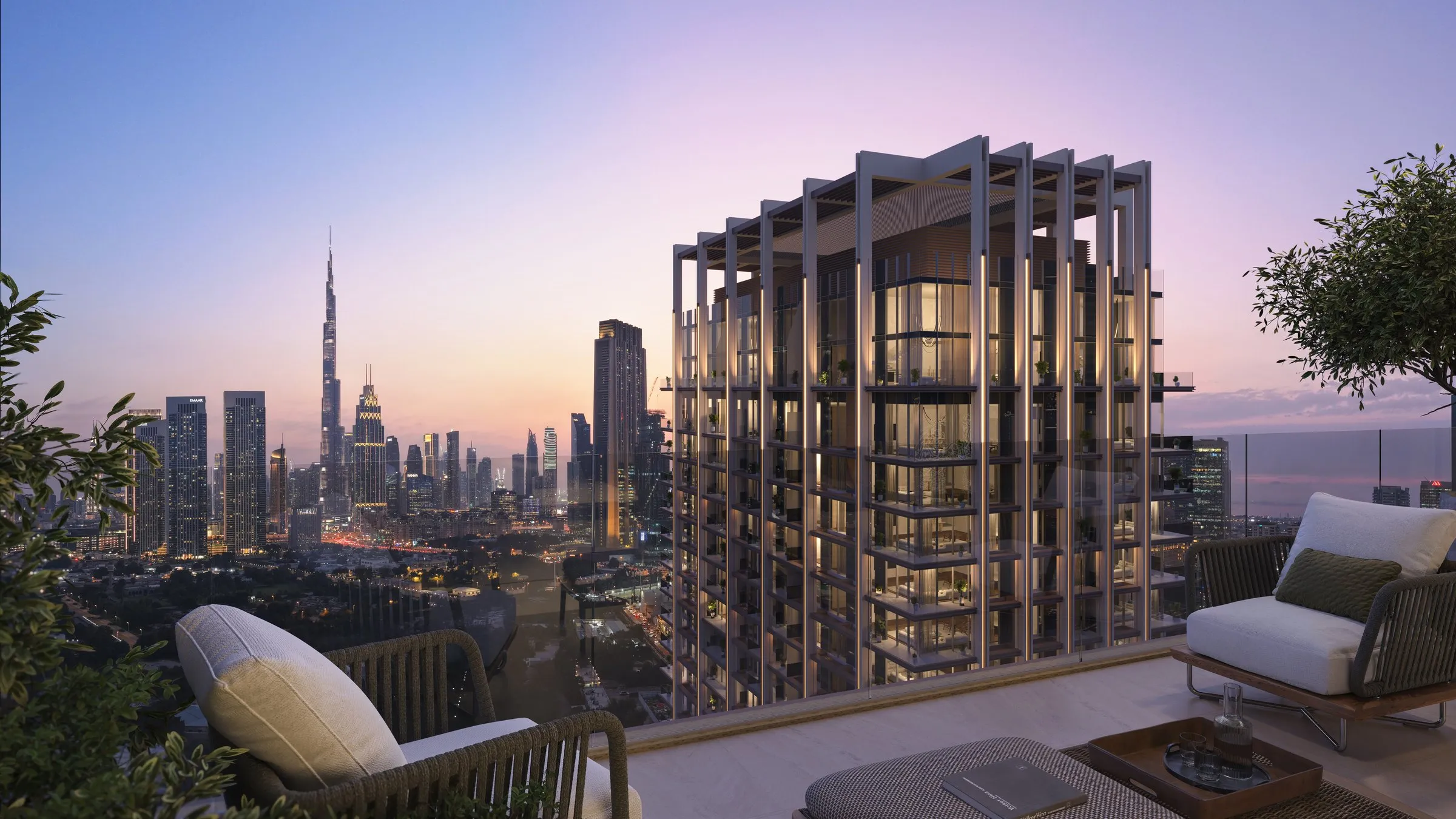
- The Residences by DIFC, DIFC Zabeel District: the first homes in DIFC’s new district, Phase A due in 2030.
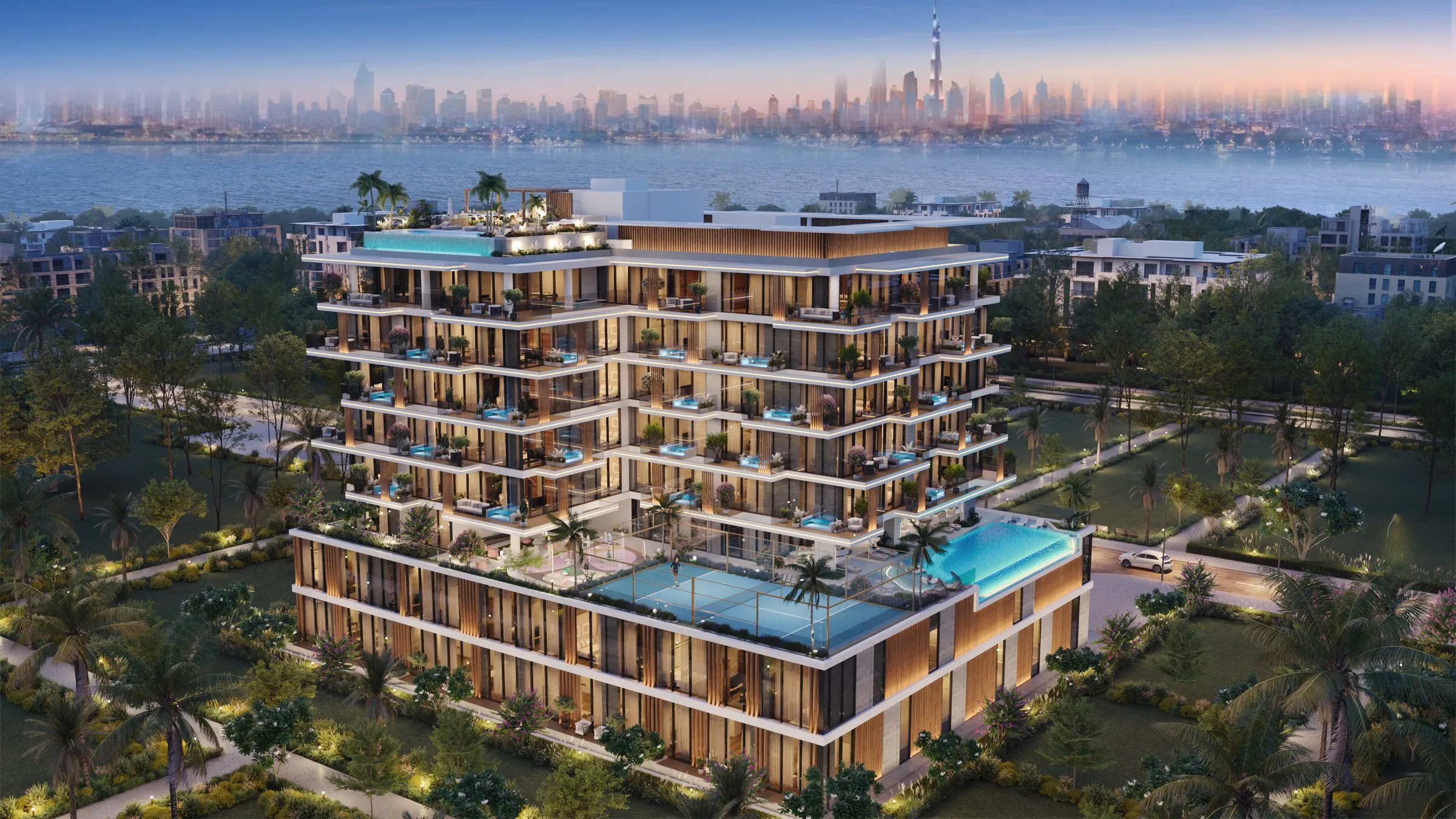
- Allegro Park, Dubai Islands: a low-rise building between park and beach with a plunge pool on every balcony.
Projects we sell in this category
Frequently asked questions
Is off-plan property in Dubai safe?
Off-plan sales in Dubai are regulated. Developers must register projects with the Dubai Land Department and receive buyers' payments into a project escrow account under Law No. 8 of 2007, and each sale is recorded in the interim register (Oqood). The main remaining risks are construction delays and choosing a developer with a weak record, which is why we check delivery history before recommending a project.
How much do I pay upfront for an off-plan apartment?
Most launches ask for 10 to 20 percent at booking, plus the Dubai Land Department registration fee of 4 percent of the price. At Meriva Sunset, for example, the plan starts with 20 percent on booking.
Can I sell an off-plan property before completion?
Usually yes, once you have paid the share the developer sets for resale, often between 30 and 40 percent, and with the developer's no-objection certificate. Each developer has its own conditions and fees, so we check them before you reserve.
Can I get a mortgage for off-plan property?
Some UAE banks finance off-plan purchases from approved developers, usually at lower loan-to-value ratios than ready homes. Many buyers instead pay the construction instalments in cash and take a mortgage for the amount due on completion.
What happens if the project is delayed?
Your Sales and Purchase Agreement sets the anticipated completion date and the rules for delays. Because your payments sit in an escrow account released against construction progress, money is tied to the building actually being built. Read the delay clauses before signing; we go through them with you.
Sources
- Dubai Land Department, rules and regulations (escrow circulars under Law No. 8 of 2007)
- Dubai Land Department, property sale registration fees
Rules and fees change. Confirm current requirements with the authority before you commit to a purchase.