Blog / Buying
How to buy property in Dubai, step by step
The whole purchase in order: what you do, who you deal with and which official checks to run before you pay anything. Resale and off-plan follow different routes, so both are set out here.
By the DHS advisory teamChecked against official sources
Quick answer
To buy property in Dubai, set a budget, check the broker and property with the Dubai Land Department, and sign a contract. For a resale home that means Form F, the developer's NOC and transfer at a registration trustee office. For off-plan it means reserving, signing the SPA, Oqood registration and instalments into escrow. Expect to pay a 4% DLD fee.

How does buying property in Dubai work?
Every purchase starts with the same three steps, then splits in two. A ready or resale home changes hands in a single event at a registration trustee office. An off-plan home is bought from the developer in stages and registered before it is built.
| Stage | Ready or resale | Off-plan |
|---|---|---|
| Budget | Price plus fees, or down payment plus fees with a mortgage | Booking payment plus the 4% DLD fee, then instalments |
| Choose | Area, building, unit, viewing | Area, developer, project, unit |
| Check | Broker, title deed, property status | Broker, developer, project, escrow account |
| Contract | Form F with the seller | SPA with the developer |
| Clearance | Developer’s NOC | Oqood registration |
| Payment | Price and fees at transfer | Instalments into escrow |
| Ownership | Title deed at transfer | Title deed after handover |
If you are weighing the two routes, our off-plan or ready comparison sets them side by side.
Step 1: Set your budget
The listing price is not the budget. A cash purchase of a ready home costs about 6 to 8% more than the price:
- DLD registration fee: 4% of the price. The published schedule splits it between buyer and seller, but in practice the buyer usually pays all of it.
- Registration trustee fee: AED 4,000 plus VAT, or AED 2,000 plus VAT below AED 500,000.
- Title deed and map charges: a few hundred dirhams.
- Agency fee: usually 2% plus VAT on a resale.
Our cost calculator works these out for any price, and the full cost guide has worked examples.
If you need a mortgage, speak to a bank before you make an offer. UAE Central Bank rules cap expatriate loans at 80% of value on a first home up to AED 5 million, 70% above that, 60% on a second home and 50% on off-plan. Banks can lend less, especially to non-residents. Our mortgage guide explains the limits.
Step 2: Choose the area and the property
Decide first whether the home is to live in, to rent out or to hold for resale, because the best area differs for each. Foreign buyers can own outright only in designated freehold areas, which include most of the communities on our comparison of Dubai’s areas.
Inspect a finished home before you sign, in person or through someone you trust. Ask for the service charge per square foot, because it affects every year of ownership.
Step 3: Run the official checks before you pay
These checks take minutes and run on the Dubai Land Department website or its Dubai REST app.
| What to check | Where | What it shows |
|---|---|---|
| The advert | The Madmoun QR code printed on the ad | Whether the ad has a valid RERA permit, which company placed it and whether the property is already sold or rented |
| The broker | Licensed real estate brokers | Whether the person appears on the RERA-licensed list |
| The title deed | Verify title deed | Whether a deed issued by the DLD is valid |
| The property | Property status enquiry | The status of a property, by area and land number |
| An off-plan project | Project status enquiry | The project’s details and completion percentage |
Since 24 April 2023, property companies in Dubai must put a QR code, linked to the ad’s Trakheesi permit, on their printed and audiovisual adverts. The DLD advises buyers to deal only with adverts that show one, so treat a listing without it as a warning sign.
For a resale, the DLD’s investor guide recommends confirming that the seller owns the property and that it is free of mortgages, liens and other charges.
For off-plan, the same guide lists five questions to answer before you sign:
- Is the project registered with RERA?
- Is there an escrow account, and what are its number and the name of its agent?
- What is the percentage of completion, and the expected completion date?
- Is the developer registered, and does it own the land or hold a development agreement with the owner?
- Does the developer have the permits it needs to sell units off-plan?
Buying a ready or resale home
Step 4: Agree the price and sign Form F
Once the price is agreed, buyer and seller sign the standard sale contract, known as Form F or the memorandum of understanding. The DLD’s investor guide says the parties must use this form and may add their own terms, as long as these do not conflict with the standard ones. If a broker represents you, you also sign the DLD’s standard broker appointment form.
Form F sets the price, the deposit and the transfer date. The deposit is commonly 10% of the price, held by the broker or a trustee until transfer. The same guide says a transaction must be registered within 60 days of signing, or a fine applies on top of the fees.
Step 5: Get the developer’s NOC
In a freehold area, the transfer needs a no-objection certificate from the developer. The DLD now asks for an electronic certificate, an e-NOC, through the Dubai REST app. It confirms that the seller is up to date with service charges, and the transfer cannot go ahead without it. The seller normally applies for it and pays for it, but check your contract.
If the seller still has a mortgage, the loan has to be cleared as part of the sale, which adds a step with the seller’s bank.
Step 6: Arrange the money
Agree early how the funds will reach the seller. The price is usually paid by manager’s cheques drawn on a UAE bank. For the DLD fees themselves, the department lists ePay, Dubai Pay, the Noqodi wallet and manager’s cheques.
With a mortgage, the bank needs time for its valuation and final offer, and it pays its share at transfer. If you live abroad, our remote buying guide covers the options.
Step 7: Complete the transfer
The transfer happens at a registration trustee office, where staff check the documents, enter the sale and collect the fees. The DLD lists it as a 20-minute service. You attend in person or send someone with a valid power of attorney, and you receive an electronic title deed and map.
UAE residents have a second route. The DLD’s Dubai Now service handles a sale online, with both parties signing digitally and the money moving through a DLD-approved escrow account. It is open only to individuals with a UAE ID, and only for apartments, offices and townhouses in freehold areas that are free of mortgages and restrictions.
Buying off-plan
Step 4: Reserve the unit
You choose a unit from the developer’s price list and pay the booking amount, often 10 to 20% of the price. Pay only into the account named in the official paperwork, never a personal account. Read our guide to whether off-plan is safe before you transfer anything.
Step 5: Sign the SPA
The Sales and Purchase Agreement sets the price, payment plan, specification and completion date, plus any limits on use such as holiday letting. Most developers send it for electronic signature. Have a lawyer read it if the amount is significant.
Step 6: Register with Oqood
The developer registers your purchase on the DLD’s interim register, Oqood, and the 4% DLD fee falls due at this point. Registration matters: under Law No. 13 of 2008, a sale of an off-plan unit that is not on the interim register is void. Ask for your Oqood certificate and keep it with the contract. Our guide to Oqood and the title deed explains what each document proves and what it costs.
Step 7: Pay instalments into escrow
Each instalment goes into the project’s escrow account, as your payment plan sets out. Under Law No. 8 of 2007 the developer can draw on that money only as construction progresses. Keep every transfer receipt.
Step 8: Take handover and receive the title deed
When the building is finished, you inspect the home, report defects using our snagging checklist, pay the balance and collect the keys. The title deed then replaces the Oqood registration.
What documents do you need?
| Document | When you need it |
|---|---|
| Emirates ID, or a valid passport for non-resident foreigners | Every transfer |
| Developer’s e-NOC | Resale in a freehold area |
| Form F | Resale |
| SPA and booking receipt | Off-plan |
| Power of attorney | If someone attends for you; the 2025 rules are strict |
| Attested documents with certified Arabic translation | Any foreign-language document |
| Income documents and bank statements | Mortgage |
| Proof of source of funds | When the developer, broker or bank asks |
How long does it take?
| Stage | Typical time |
|---|---|
| Official checks | Minutes, once you have the details |
| Transfer at the trustee office | 20 minutes as listed by the DLD; same day if the documents are in order |
| Resale, offer to title deed | About 30 to 45 days in market guides; often longer with a mortgage |
| Off-plan, reservation to title deed | Until the building is finished, often years |
The date that binds you is the one in your contract, so agree one you can meet.
What happens after you buy?
- Connect utilities. Open your DEWA account, and a district cooling account if the building has one. Our utilities guide lists the deposits and fees.
- Budget for running costs. Service charges are billed every year, and there is no annual property tax.
- If you let the home, a yearly lease is registered in Ejari, and short-term letting needs a DET permit.
- If the property cost AED 2 million or more, check whether you qualify for a Golden Visa.
- Plan what happens to the property if you die. Non-Muslim owners can register a will in the UAE.
- If you sell later, the same route runs in reverse. Our guide to selling property in Dubai covers the steps and the seller’s costs.
Which mistakes cost buyers the most?
- Paying before checking. Run the checks in step 3 first, even with a trusted broker.
- Paying the wrong account. Treat any request to pay a personal account, or to change bank details by email, as a warning sign.
- Budgeting only for the price. Fees of 6 to 8% are due in cash, and a mortgage does not reduce them because they are charged on the full price.
- Ignoring the service charge. Two similar flats can cost very different amounts to hold.
- Giving a broad power of attorney. Limit it to one property and one transaction.
How DHS helps
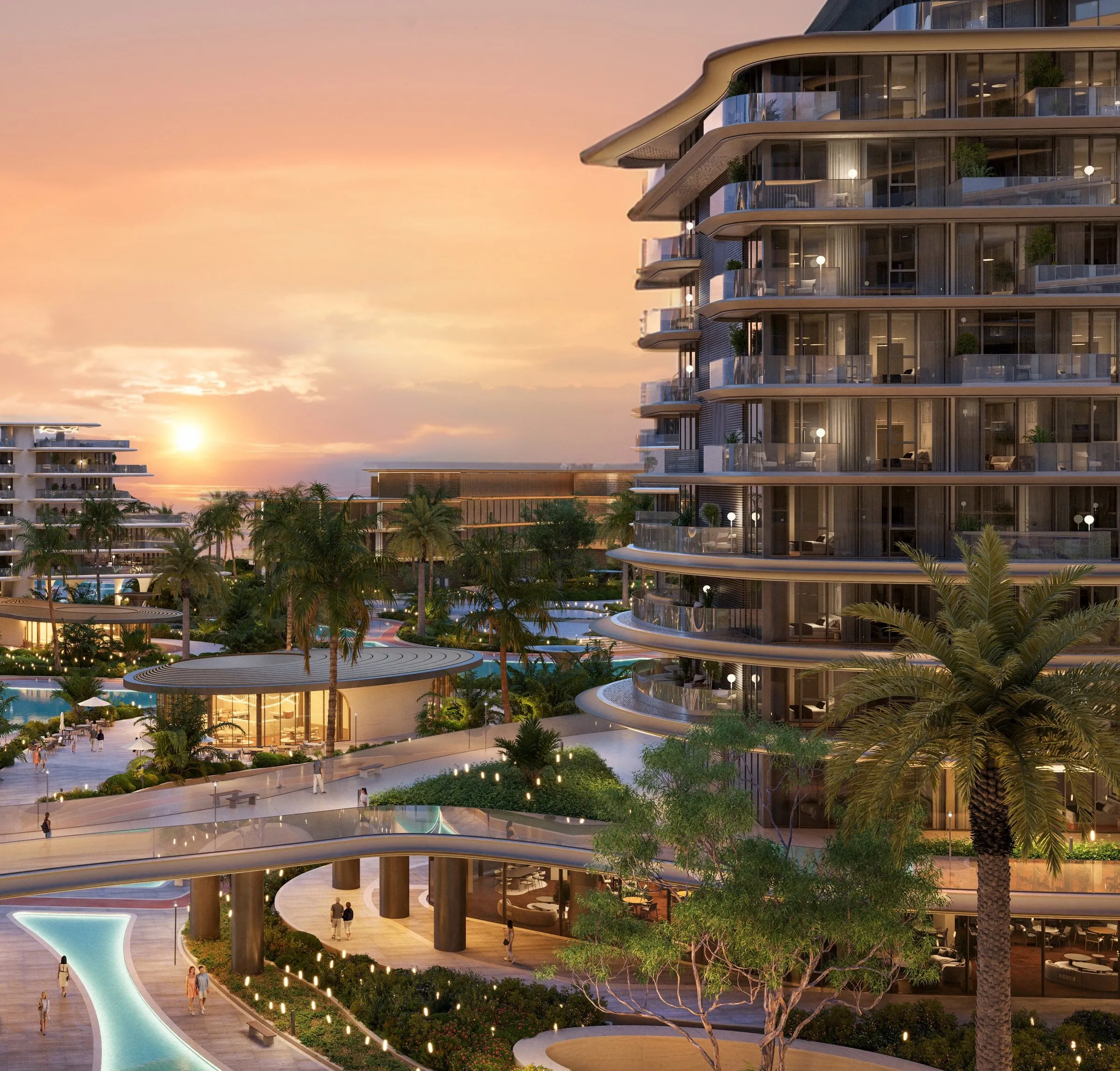
We shortlist properties against your goal, check developers and contracts, coordinate payments and registration, and stay with you through handover and letting. We work in English, German, Italian, Spanish and Serbian/Croatian. The projects we sell, such as Meriva Sunset, are off-plan, so bear that in mind when you weigh our advice on the two routes. Tell us what you are looking for.
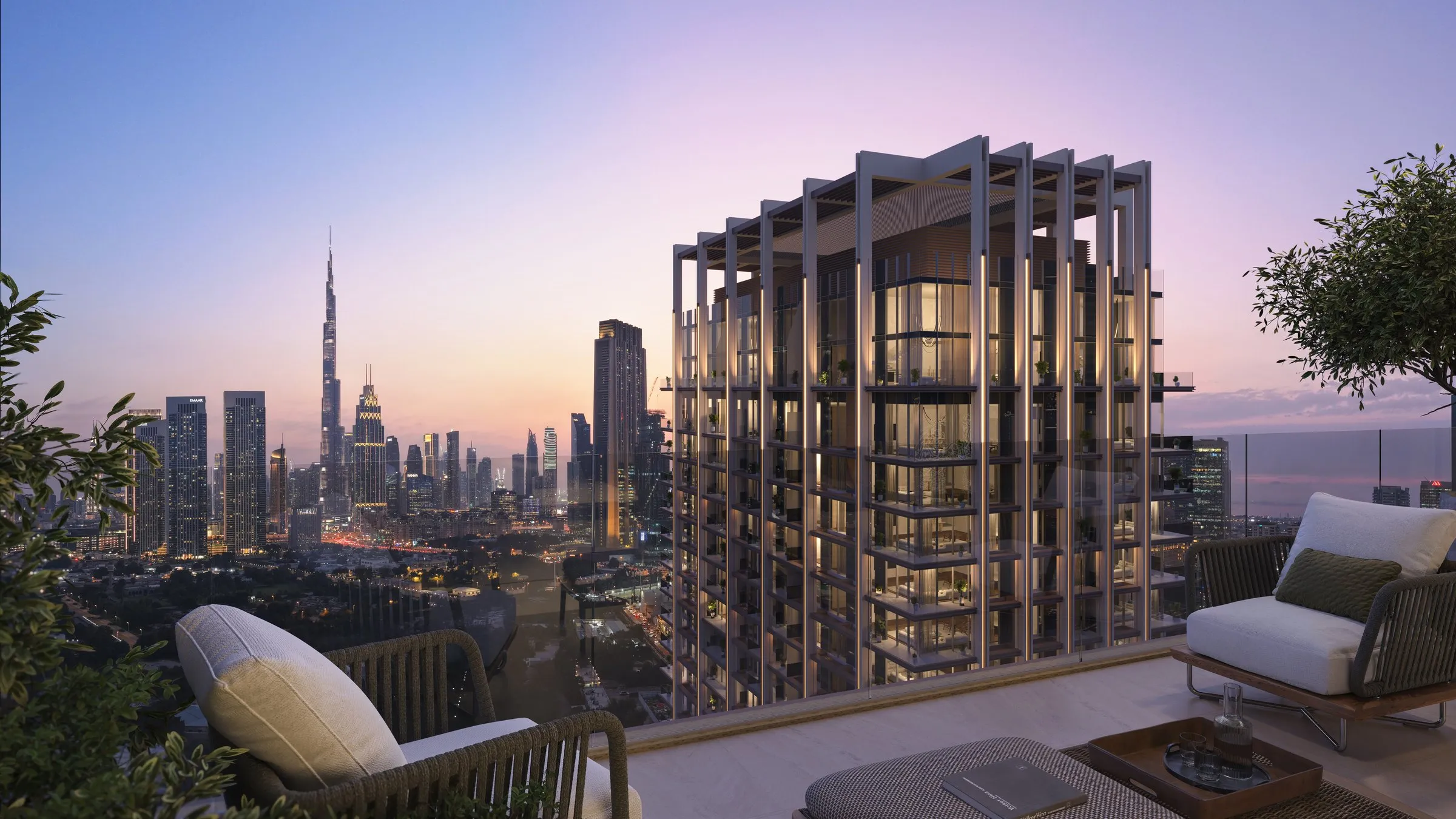
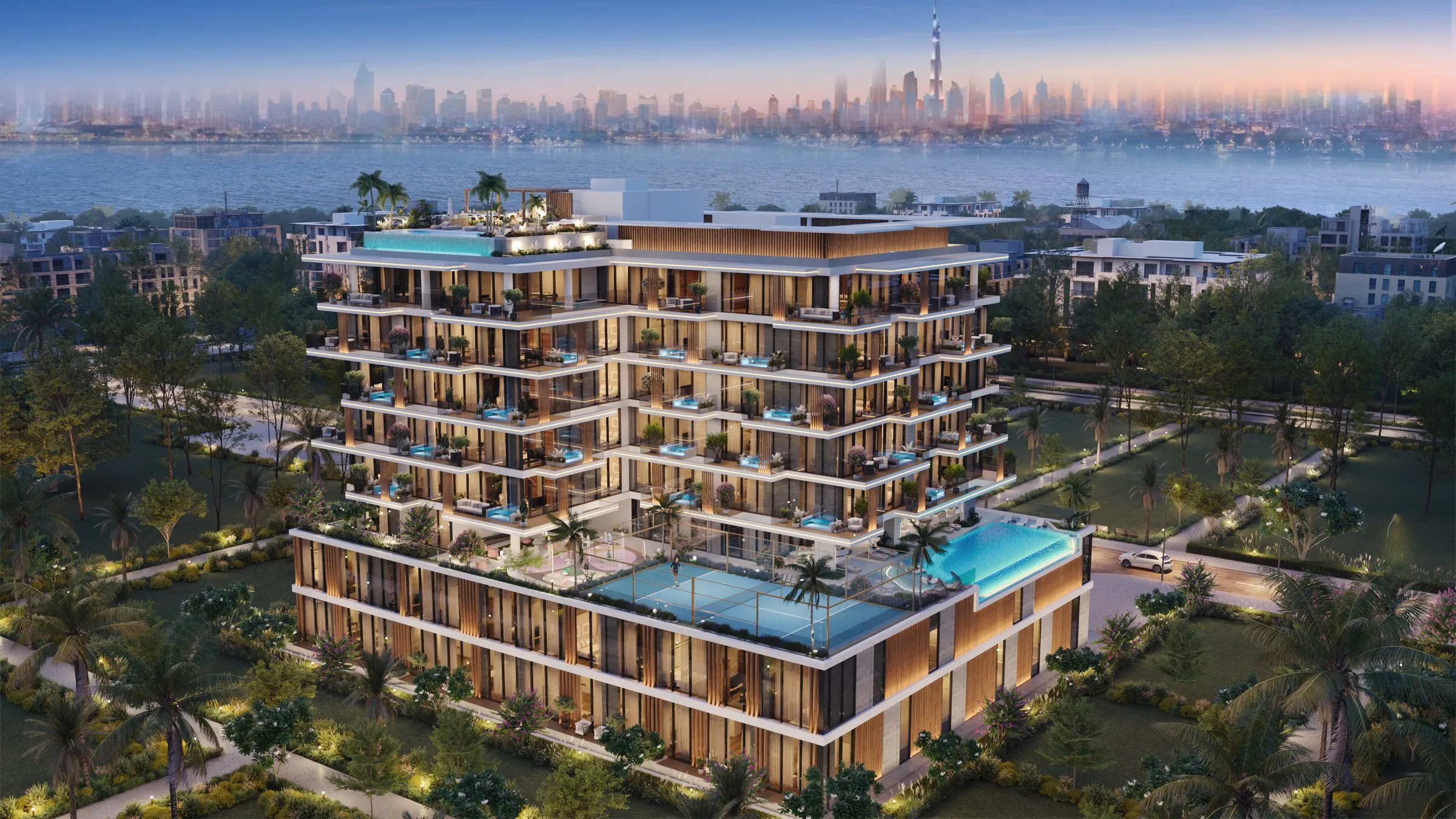
Projects in this article
Frequently asked questions
What are the steps to buy property in Dubai?
Set your budget, choose the area and property, and check the broker and property through the Dubai Land Department. For a resale home, sign Form F, wait for the developer's NOC and complete the transfer at a registration trustee office. For off-plan, reserve the unit, sign the SPA, get Oqood registration and pay instalments into escrow until handover.
How long does it take to buy property in Dubai?
The transfer itself is listed by the Dubai Land Department as a 20-minute service. Market guides usually quote about 30 to 45 days from offer to title deed for a resale, and often longer with a mortgage. An off-plan buyer receives the title deed only after the building is finished.
Can I buy property in Dubai without a broker?
Yes. The Dubai Land Department's process does not require one, and you can buy off-plan directly from a developer. If you do use a broker, check that they appear on the DLD's list of licensed brokers. You still need the same contract, NOC and registration steps.
What documents do I need to buy property in Dubai?
The Dubai Land Department asks for an Emirates ID, or a valid passport for non-resident foreigners, plus the developer's e-NOC for a home in a freehold area. Foreign-language documents must be attested and translated into Arabic. A mortgage needs the bank's own income and identity documents.
Can a non-resident buy through the Dubai Now app?
No. The Dubai Land Department limits its Dubai Now buying and selling service to individuals with a UAE ID. Non-residents complete a resale at a registration trustee office, in person or through someone holding a valid power of attorney.
Sources
- Dubai Land Department, property sale registration
- Dubai Land Department, buy or sell property via Dubai Now
- Dubai Land Department, Know Your Rights for Real Estate Investors in Dubai (2017 edition, PDF)
- Dubai Land Department, licensed real estate brokers
- Dubai Land Department, verify title deed
- Dubai Land Department, property status enquiry
- Dubai Land Department, project status enquiry
- Dubai Land Department, Madmoun QR codes on real estate adverts (18 April 2023)
- UAE Central Bank Rulebook, mortgage ratios (Article 3)
Rules and fees change. Confirm current requirements with the authority before you commit to a purchase.