Blog / Areas
Palm Jumeirah: an area guide for buyers
Nakheel's palm-shaped island reaches five kilometres into the Gulf and is home to around 25,000 people. Where on it you buy changes almost everything, from the view to the price.
By the DHS advisory teamChecked against official sources
Quick answer
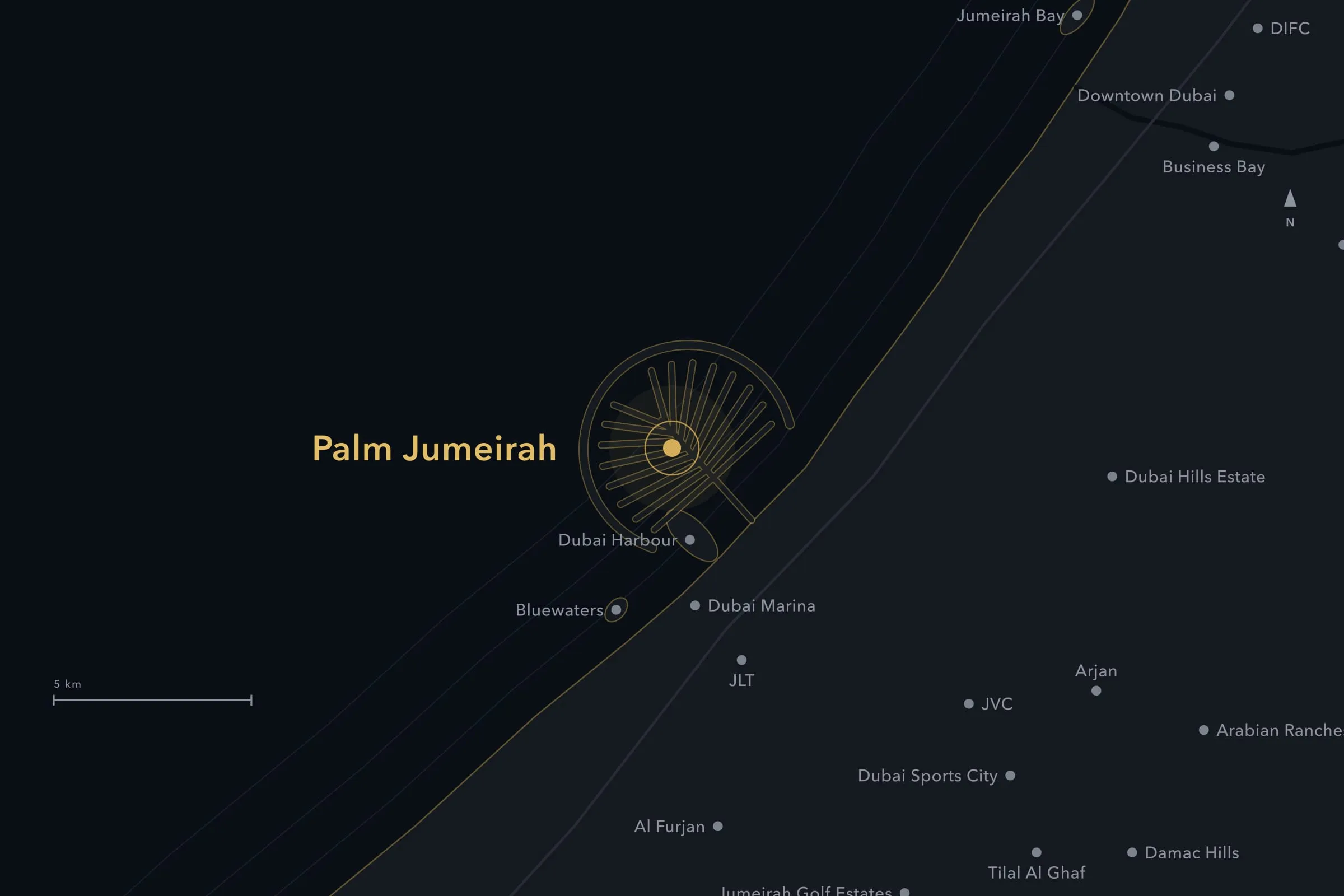
Palm Jumeirah is a freehold, palm-shaped island by Nakheel that reaches about 5 km into the Gulf and is home to around 25,000 people. Apartments are mostly on the trunk, villas with private beaches on the sixteen fronds, and resorts and branded residences on the crescent. It is one of the most expensive addresses in Dubai.
Palm Jumeirah at a glance
| Location | Off the coast of Al Sufouh, between Dubai Marina and Umm Suqeim |
| Master developer | Nakheel |
| Launched | 2001 |
| Size | Extends about 5 km into the Gulf; around 25,000 residents, according to Nakheel |
| Homes | Apartments on the trunk, villas on the fronds, resort residences on the crescent |
| Ownership | Freehold for buyers of all nationalities |
| Market | Mostly ready resale, with new launches on remaining plots |
| Transport | Palm Monorail, trunk road to Sheikh Zayed Road, tunnel to the crescent |
Palm Jumeirah was the project that put Dubai’s reclaimed islands on the map. Nakheel launched it in 2001, and it is now one of the city’s most sought-after addresses, with private beaches, landmark hotels and some of the highest prices per square foot in Dubai.
Trunk, fronds and crescent
The island has three parts, and each is a different market:
| Trunk | Fronds | Crescent | |
|---|---|---|---|
| What it is | The central spine from the mainland | Sixteen branches off the trunk | The outer breakwater ring |
| Homes | Apartment buildings, some townhouses | Detached villas, gated streets | Resorts, hotels and branded residences |
| Feel | Busiest part, shops and restaurants | Quiet, private, residential | Resort life, open sea views |
| Typical buyer | Apartment owners and investors | Families, owner-occupiers | Second-home and trophy buyers |
The trunk carries the main road, the monorail, Nakheel Mall, Golden Mile Galleria and most of the apartment buildings, including Golden Mile, Marina Residences and Shoreline. It is the most convenient part of the island and the easiest to rent out.
The fronds hold the villas. Each one is a cul-de-sac with homes on both sides, every plot with its own stretch of beach. Position matters: villas near the tip of a frond are more private and have wider views; those near the trunk are closer to traffic and amenities.
The crescent is reached by an underwater tunnel and is lined with resorts, including Atlantis, alongside branded residences with open views of the sea or the Dubai skyline.
Getting around
The Palm Monorail runs along the trunk, linking Gateway Towers, Al Ittihad Park, Nakheel Mall and Atlantis Aquaventure. From the Gateway end you can connect to the Dubai Tram and on to the metro. In practice, most residents drive: the trunk joins Sheikh Zayed Road within a few minutes, and Dubai Marina is next door. At weekends and in the high season the trunk road can be slow.
What living there is like
Life on the Palm depends on where you are. The trunk has restaurants, beach clubs and shops within a short walk, and plenty of visitors. The fronds are quiet and residential. The crescent feels like a resort, because much of it is one. Above the trunk, The View at The Palm, an observation deck in The Palm Tower, gives a full view of the island’s shape.
Who Palm Jumeirah suits
- Families who want a beachfront villa within the city.
- Owner-occupiers and second-home buyers looking for privacy and sea views.
- Investors in the prime segment, where the supply of new beachfront land is limited.
- Apartment buyers who want a Palm address and good rental demand, on the trunk.
What to check before you buy
- Exact location. Which frond, how far along it, and which way the house or apartment faces. Views of the Burj Al Arab, the Marina skyline or the open sea are priced differently.
- Age and condition. Many villas and trunk buildings date from the late 2000s. Budget for renovation if the home has not been updated.
- Extension history. If a villa has been extended, ask for the approvals; unapproved works can delay a sale.
- Service charges and community fees, for both the building and the master community. Our service charges guide explains how they work.
- Short-stay rules, if you plan to let the home as a holiday home. See our holiday home guide.
Alternatives to the Palm
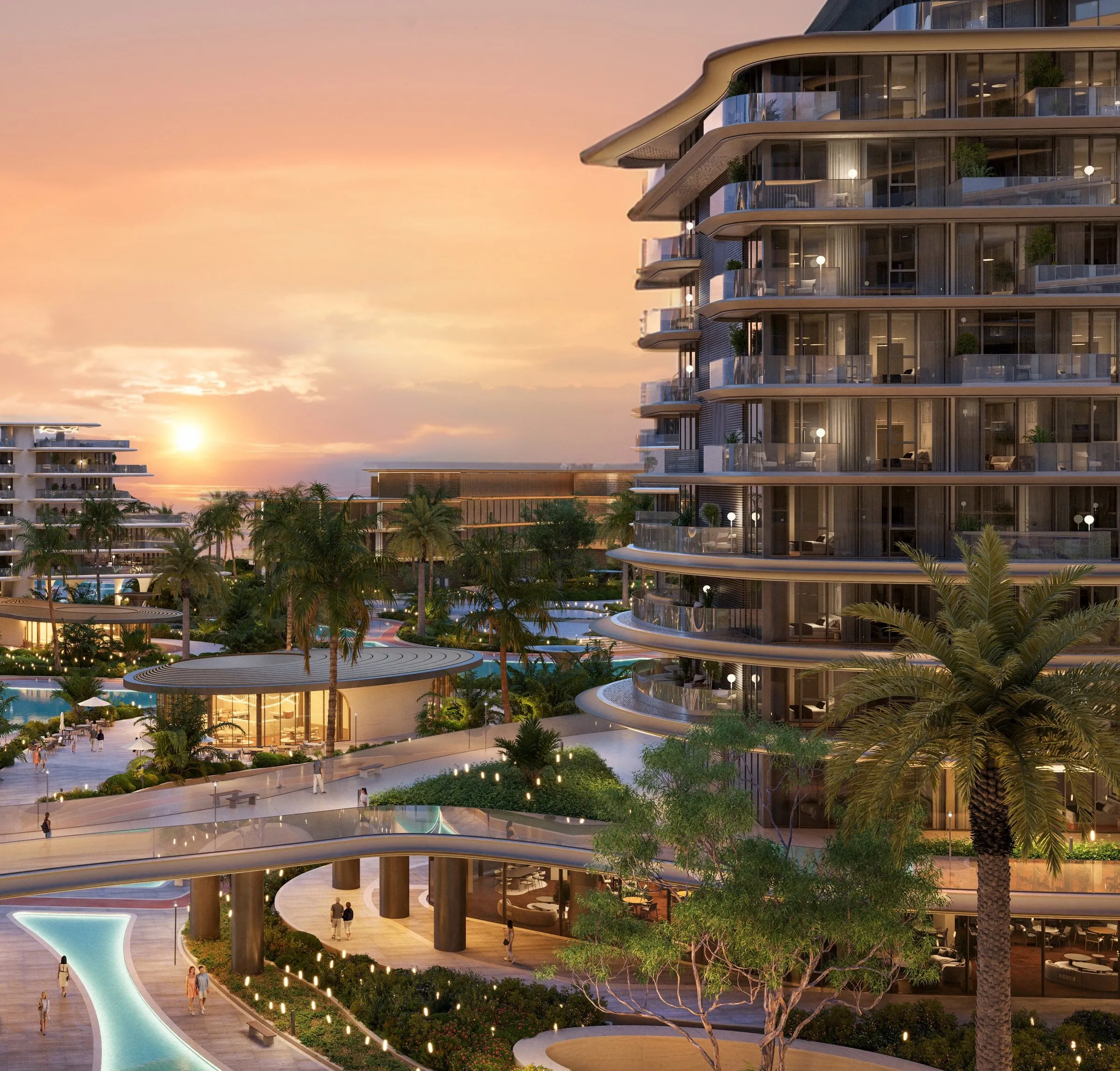
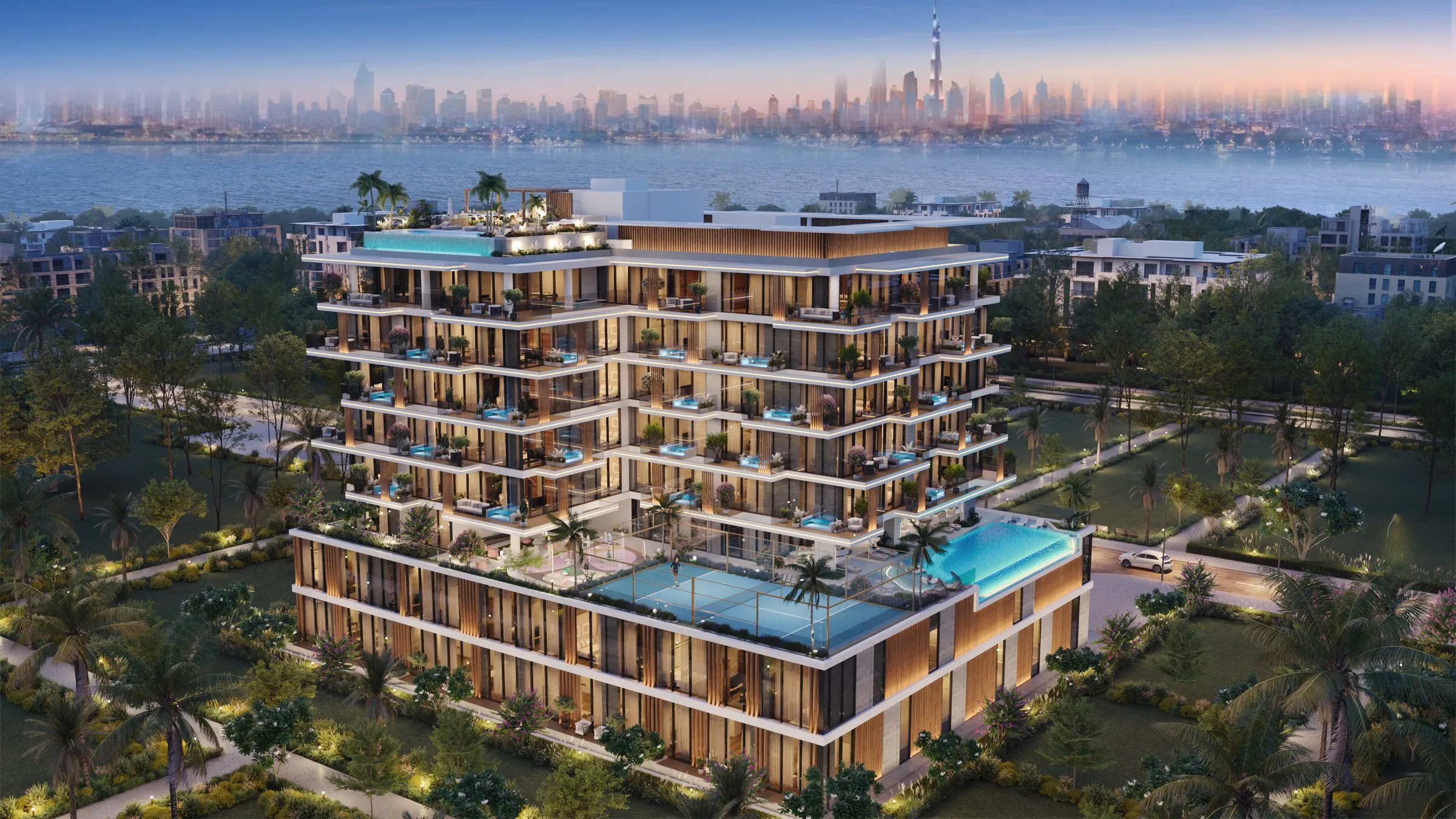
For buyers who want island life at an earlier stage, Dubai Islands, also master-planned by Nakheel, is the main alternative. It offers beachfront homes in new buildings, sold off-plan with payment plans. Meriva Sunset is a beachfront tower there, and Allegro Park is a low-rise building where every home has its own plunge pool. Read our Dubai Islands guide to compare.
Ask us for Palm Jumeirah availability or a side-by-side comparison with Dubai Islands.
Projects in this article
Frequently asked questions
Can foreigners buy on Palm Jumeirah?
Yes. Palm Jumeirah is freehold, and buyers of any nationality can own villas, townhouses and apartments there, registered with the Dubai Land Department.
Where are the villas on Palm Jumeirah?
On the sixteen fronds. Each frond is a gated street of villas with private beach frontage. Apartments are mostly on the trunk, and the crescent is mainly hotels, resorts and branded residences.
How do you get on and off the Palm?
By road along the trunk from Sheikh Zayed Road, with an underwater tunnel linking the trunk to the crescent. The Palm Monorail runs along the trunk from the Gateway station to Atlantis, with stops at Al Ittihad Park and Nakheel Mall.
Can I build or extend a villa on Palm Jumeirah?
Extensions and rebuilds are common, but they need approvals from the master developer and the authorities before work starts. Factor in the time and cost if you buy to renovate.
Is Palm Jumeirah only for luxury buyers?
It is one of the most expensive addresses in Dubai, but there is a range: trunk apartments cost far less than frond villas or crescent residences, and studios and one-bedroom apartments exist in several buildings.
Sources
Rules and fees change. Confirm current requirements with the authority before you commit to a purchase.